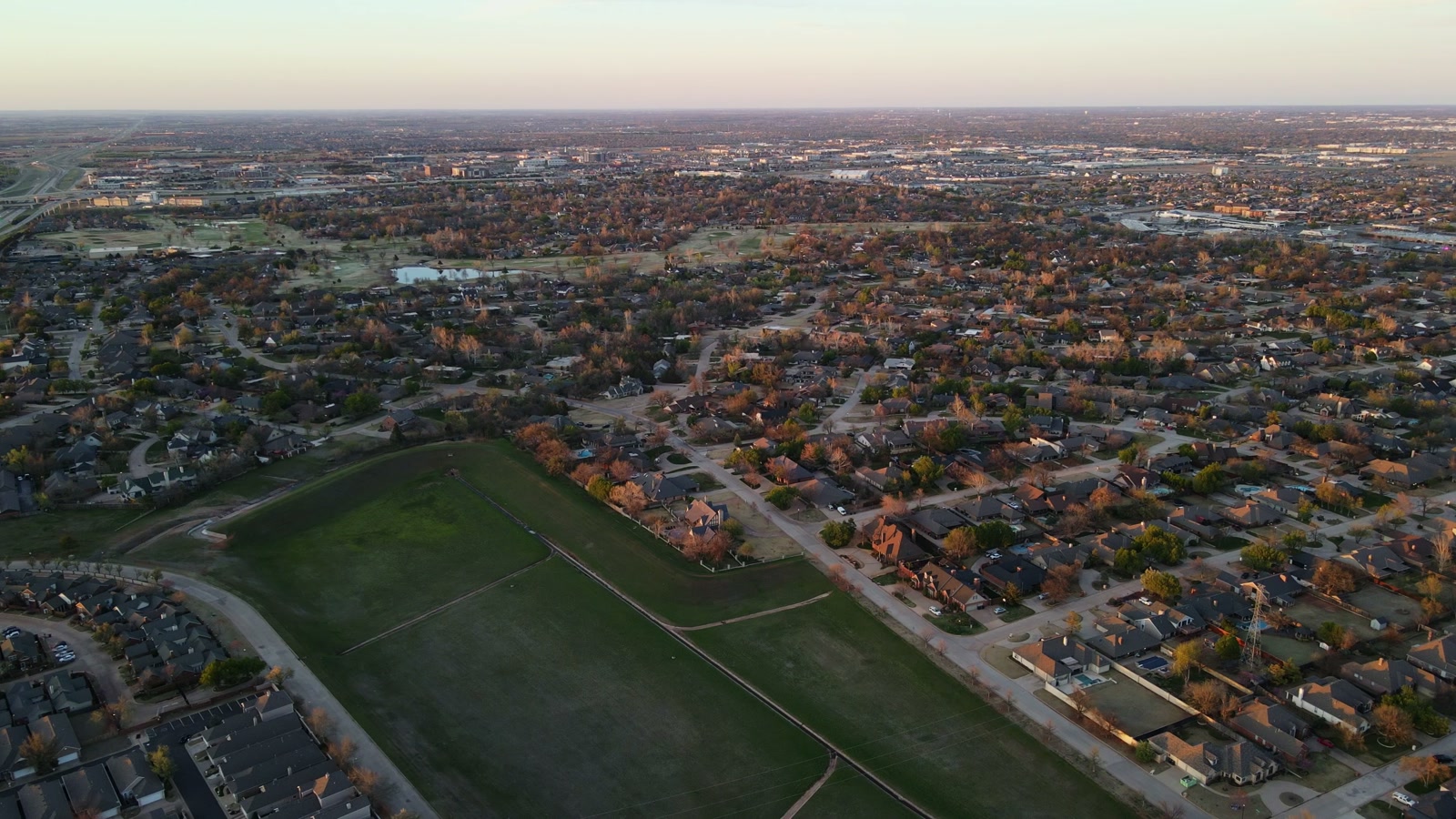
A drone roof inspection uses a professional drone to photograph and video-document a roof from angles a person on a ladder cannot safely reach. In 2026, drone inspections have become the standard for insurance damage claims, pre-purchase property assessments, storm damage documentation, and preventive maintenance evaluations across residential and commercial roofing. Cost typically runs $150 to $400 for residential and light commercial roofs, and $500 to $1,200 for larger commercial and industrial facilities.
This guide walks through what a drone roof inspection actually involves, what the deliverables look like, when it makes sense versus a traditional inspection, and how to hire the right operator.
Tulsa Aerial provides drone roof inspection services across the Tulsa and Oklahoma City metros for property owners, roofing contractors, and insurance professionals.
Why drone inspections replaced ladder inspections for most cases
For roughly a century, roof inspections meant putting someone on a ladder or up on the roof itself. That approach worked, but it created three specific problems: risk to the inspector, limited angles the inspector could reach, and slow documentation that required manual note-taking.
Drone inspections solve all three. The drone flies close to the roof surface, captures high-resolution photos and video from every angle including steep pitches and multi-story structures, and produces a complete photographic record in 30 to 60 minutes.
The result is faster, safer, more thorough documentation than a person on a ladder can produce. Insurance companies started accepting drone inspection evidence in the late 2010s, and by 2026 most major carriers explicitly request it for claims involving hard-to-access areas. For property owners, roofing contractors, and adjusters, drone inspections are now the default rather than the exception.
What a drone roof inspection actually delivers
A professional drone roof inspection produces a specific set of deliverables:
- High-resolution photos of the entire roof. Typically 30 to 60 photographs covering every surface, valley, ridge, and penetration (chimneys, vents, skylights), plus gutters, downspouts, and any areas of concern.
- Wide-angle overview shots. Multiple aerial views showing roof orientation, adjacent structures, tree overhang, and property context.
- Detail shots of any damage or wear. Close-ups of missing shingles, cracked tiles, damaged flashing, sagging areas, or standing water, flown within 5 to 15 feet of the surface.
- Video walkthrough (optional). A 60 to 120 second aerial video documenting condition, useful for insurance claims.
- Thermal imaging (optional). Infrared identifies moisture intrusion, insulation gaps, and heat loss that visual photography does not show. Especially valuable for commercial flat roofs and post-storm assessment.
- Written report (optional). Some operators annotate photos with findings and severity. Others deliver photos and video only, leaving analysis to the contractor or adjuster.
Delivery for a standard drone roof inspection is 24 to 48 hours after the flight. Rush delivery within 24 hours is available for an additional fee.
When to hire a drone roof inspection
After a storm. Oklahoma sees significant hail, wind, and severe weather every year. Drone inspections document damage quickly for insurance claims and give owners a clear record of the roof's condition right after the event. Fast documentation matters, because damage becomes harder to attribute to a specific event the longer time passes.
Before buying a property. For a fraction of the cost of a full home inspection, buyers get complete photographic documentation of the roof, which informs negotiation and reveals maintenance issues that would surface later.
Before roofing work. Contractors bidding a job benefit from comprehensive documentation of the roof they are about to replace or repair. It scopes the job accurately and documents the starting condition.
For insurance claims. Carriers now routinely request drone imagery for damage claims, especially hail and hard-to-access commercial roofs. Owners who provide it tend to see faster resolution.
For preventive maintenance. Property managers with multiple buildings or large commercial roofs benefit from annual or semi-annual inspections to catch small issues before they become expensive repairs.
When the roof is dangerous to access. Steep pitches, fragile materials, multi-story structures, and roofs with active leaks are all situations where drone inspection is dramatically safer than sending someone up.
When a drone inspection is not the right tool
A drone inspection is documentation. It does not replace the physical presence of a trained roofer for certain tasks.
- Repair scoping requires physical access. A drone photo shows what a roof looks like from above, not what is beneath the surface layer. Actual scoping requires a contractor to inspect the deck, underlayment, and structural condition.
- Ongoing maintenance requires hands-on work. Drone inspections identify issues. They do not clean gutters, replace shingles, or seal flashing.
- Some protocols require physical presence. Structural evaluation, warranty inspections, and certain insurance protocols still require a certified inspector on the roof.
For these cases, drone inspection is a complement to a physical inspection, not a replacement.
What drone roof inspections cost in Oklahoma
- Residential (single-family, townhomes, small multi-family): $150 to $400 per inspection
- Light commercial (small offices, retail, restaurants): $250 to $550 per inspection
- Commercial (warehouses, larger offices, industrial): $500 to $1,200 per inspection
- Large industrial or multi-building complexes: $1,000 to $3,000 or more
Add-ons: thermal imaging ($200 to $500), a written report with annotations ($150 to $300), rush delivery within 24 hours ($75 to $200), same-day delivery ($200 to $400). Property managers and contractors with recurring needs typically get package pricing 15 to 25 percent below standard rates. For the full picture on rates, see our guide to drone photography cost.
How to hire the right operator
- FAA Part 107 certification. Legally required for paid flight. Ask for the number.
- Commercial drone insurance. At least $1 million liability. Ask for a certificate for significant commercial work.
- Roof-specific experience. Real estate photography and roof inspection are different disciplines. Ask for prior roof inspection deliverables.
- Deliverable format that matches your need. Owners want photos and a simple report; contractors want high-res photos for scoping; adjusters want claim-ready documentation.
- Response time for weather-driven work. After major storms, operators get flooded. Established operators respond within 24 to 48 hours.
Working with Tulsa Aerial
Tulsa Aerial provides professional drone roof inspections across the Tulsa and Oklahoma City metros. Every inspection is flown by an FAA Part 107 certified pilot, covered by commercial drone insurance, and delivered with high-resolution photography and video suitable for insurance claims, contractor scoping, or owner records. For contractors and property managers with recurring needs, we offer retainer pricing.